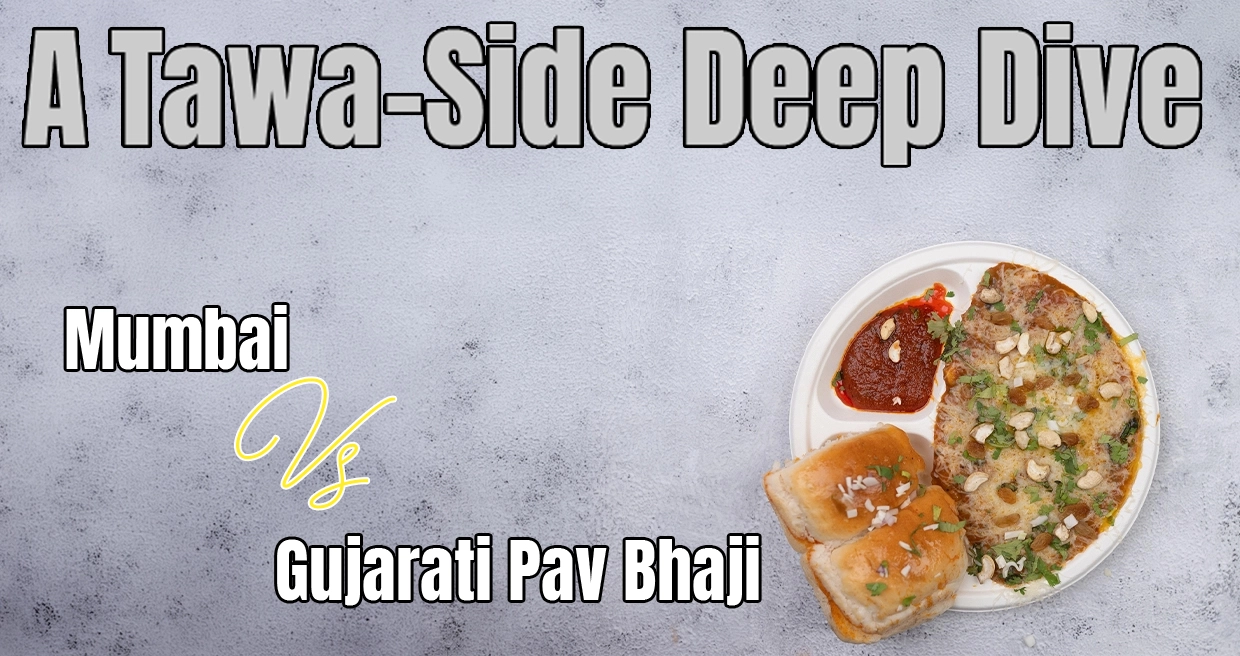

Two cities. One dish. Two completely different souls.
Pav bhaji is one of those rare Indian dishes where the regional version is genuinely a different experience – not just a tweak, not just a garnish change, but a different philosophy of what the dish is supposed to feel like. Order one in Bandra and order one in Bopal and you’re eating two different relatives, not the same dish.
If you’ve grown up in Gujarat, you’ve probably eaten the Gujarati version your whole life and assumed that’s just what pav bhaji is. If you’ve spent any time in Mumbai, you might have a strong opinion about anyone who adds sugar. This piece sorts out the difference, fairly, from both sides of the tawa.
A Quick Origin Story
Pav bhaji was born in Mumbai in the 1850s, in the textile mills. Mill workers needed a fast, cheap, filling lunch that could be eaten one-handed during a short break. Someone – history doesn’t quite agree on who – mashed up the vegetables, spiced them heavily, served them with two soft buns, and the city’s most enduring street food was on the menu.
As the dish travelled north into Gujarat over the next century, it found a different audience with different tastebuds, and it adapted. The result is two genuine traditions of the same dish, each with passionate defenders.
Mumbai-Style: The Tawa Tells the Truth
The Mumbai version is built on one ingredient: butter. A serious amount of it. You’ll see a Mumbai bhaji chef working a large flat tawa, mashing vegetables with the flat side of a heavy ladle while a small mountain of Amul butter slowly disappears into the gravy. It is not subtle.
The flavour profile is bold, smoky, and slightly heavy. The bhaji is mashed almost to a paste – no chunks, nothing to chew. Pav bhaji masala dominates, the colour is deep red from Kashmiri chilli and tomato, and the finish is salty and rich. Sweetness is not in the picture.
The pav arrives sliced open, smeared with butter, and toasted on the same tawa the bhaji was made on. That tawa is everything. It carries the residue of a thousand previous orders and gives every plate a particular charred edge you can’t fake at home.
Gujarat-Style: Where the Sweetness Sneaks In
Gujarati pav bhaji is the same dish raised in a different household. The vegetables are mashed more loosely – you can still see the cauliflower, the peas keep a little shape. The butter is dialled back. The spice is dialled back. And then, the move that horrifies Mumbai purists: a touch of jaggery or sugar.
It’s not a dessert-level addition. It’s a quiet sweetness that balances the tomato and chilli – the same impulse you find in Gujarati dal, undhiyu, or shaak. The result is a milder, more rounded bhaji. Friendlier to children, easier on the stomach, and arguably more snackable as a meal.
Garnish leans heavier on coriander, finely chopped onion with a squeeze of lemon, and sometimes – and this is where regional pride peaks – a sprinkle of crushed peanuts. The peanuts are not universal. But where they show up, they add texture that the Mumbai version doesn’t have.
The Pav Question: Buttered vs. Plain
Both styles toast the pav, but the Mumbai pav is non-negotiably bathed in butter on the tawa until the surface is golden and the bun feels almost crispy on the outside. The Gujarat version often serves a lighter toast – the pav still warm and soft, but not glistening. If you eat with someone who orders extra butter on the side, you’ll know which camp they belong to within thirty seconds.
Garnishes: The Onion, the Lemon, the Peanut
Here’s a fair side-by-side of what you’ll typically find on the plate:
- Mumbai-style: chopped raw onion, lemon wedge, generous coriander, sometimes a pat of extra butter on top of the bhaji
- Gujarati-style: chopped raw onion, lemon wedge, lots of coriander, optional crushed peanuts, sometimes sev
The peanut topping in particular is divisive. To a Gujarati eater, it adds the crunch the dish was missing. To a Mumbai eater, it’s heresy.
Which One Should You Try First?
Honest answer: try the Mumbai version first if you’ve never had pav bhaji before. It is the dish in its most original, uncompromised form – the butter, the masala, the tawa, all working at full intensity.
Then try the Gujarati version on a separate visit. You’ll be able to taste exactly where it diverges – the lighter hand, the touch of sweetness, the peanut and onion garnish. Eating them on the same day muddles the comparison; eating them a week apart makes the differences sing.
Where to Taste Both in Gandhinagar
The Capita @ G Town’s food court features Mumbai-style pav bhaji made on a proper tawa, in the original style – heavy on butter, heavy on flavour, finished with chopped peanuts and coriander for a small local twist. It’s the dish in conversation with both cities, which feels right for a food park built on the idea that no cuisine has to apologise for where it’s from.
Whichever camp you belong to, the tawa is on. Come settle the debate for yourself.
Author: Content Crest Media